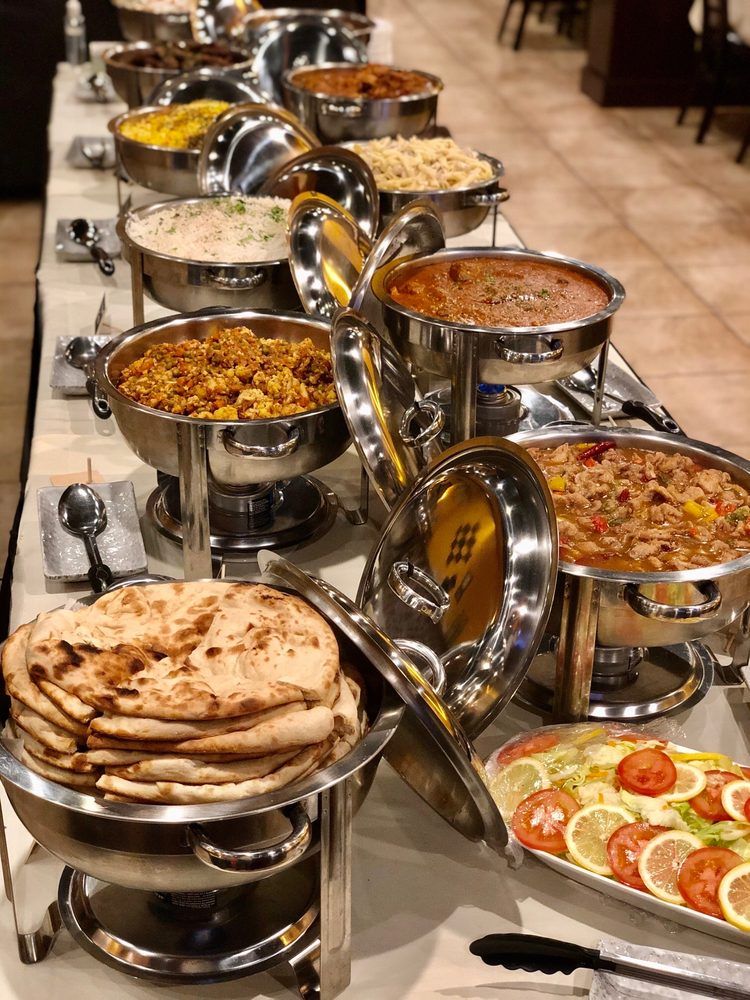
A well-planned Indian buffet can be one of the highlights of a celebration.
When guests walk toward a beautifully arranged buffet, they should feel that there is something for everyone. There should be familiar favourites, interesting choices, different textures, comforting dishes, refreshing accompaniments and, of course, something special to finish the meal.
But creating a good buffet is not simply about adding more dishes.
A buffet with too many similar items can feel overwhelming. A menu that is too small may not provide enough variety. Rich dishes placed together can make the meal feel heavy, while poor placement can create unnecessary queues.
This is why Indian buffet menu planning requires a little more thought than simply making a list of dishes.
Whether you are planning a wedding, family function, religious gathering, corporate event or another celebration, the goal should be to create a buffet where the food, presentation and guest experience work together.
In this guide, we will explore how to build a balanced Indian buffet menu from starters to desserts.
What Makes an Indian Buffet Menu Balanced?
A balanced buffet gives guests enough choice without creating unnecessary repetition.
It considers:
- Variety
- Flavour
- Texture
- Spice levels
- Vegetarian options
- Seasonal ingredients
- Guest preferences
- Meal timing
- Presentation
- Service flow
- Desserts and sweets
Most importantly, every dish should have a purpose.
Instead of asking:
“How many dishes should we serve?”
ask:
“Does every dish add something different to the meal?”
That simple question can make menu planning much easier.
Start With the Occasion
Before selecting individual dishes, understand the event.
A wedding reception, afternoon family gathering and corporate lunch may all require different buffet styles.
Think about:
- Type of event
- Time of day
- Number of guests
- Venue
- Season
- Formal or casual setting
- Guest demographics
- Cultural or religious considerations
For example, an evening wedding reception may support a more elaborate buffet, while a smaller family lunch may work better with a focused selection of carefully chosen dishes.
The menu should match the occasion.
Understand Your Guests
A buffet is ultimately designed for the people who will eat it.
Indian celebrations often bring together several generations and different food preferences.
Your guest list may include:
- Children
- Young adults
- Parents
- Senior family members
- Guests from different regions
- Guests with dietary requirements
- People who enjoy traditional flavours
- People who prefer milder or more contemporary choices
You do not have to create a separate dish for everyone.
Instead, create enough variety that guests can comfortably build a meal they enjoy.
Build the Buffet in Sections
One of the easiest ways to organize an Indian buffet menu is to divide it into clear sections.
A typical buffet might include:
- Welcome beverages
- Starters
- Chaat or live counters
- Salads and accompaniments
- Main-course vegetables
- Dal
- Paneer or other substantial preparations
- Breads
- Rice
- Desserts
- Indian sweets
- Beverages
Not every event needs every section.
The purpose of this structure is to help you think about the meal as a complete experience.
Choose Starters With Different Textures
Starters are often the first major part of the buffet guests experience.
Rather than selecting several items that are all fried or similar in texture, create contrast.
You could consider a combination of:
- Crispy preparations
- Grilled items
- Roasted options
- Chaat-style dishes
- Bite-sized snacks
- Regional specialities
For example, if one starter is rich and crispy, another could be grilled or lighter.
This makes the selection feel more interesting.
You also need to consider how starters will be served.
At a large event, some may work better as passed appetisers, while others may be better suited to a dedicated counter.
Add a Chaat or Live Counter When Appropriate
Live counters can bring energy and interaction to an Indian buffet.
They allow guests to see food being prepared and customized.
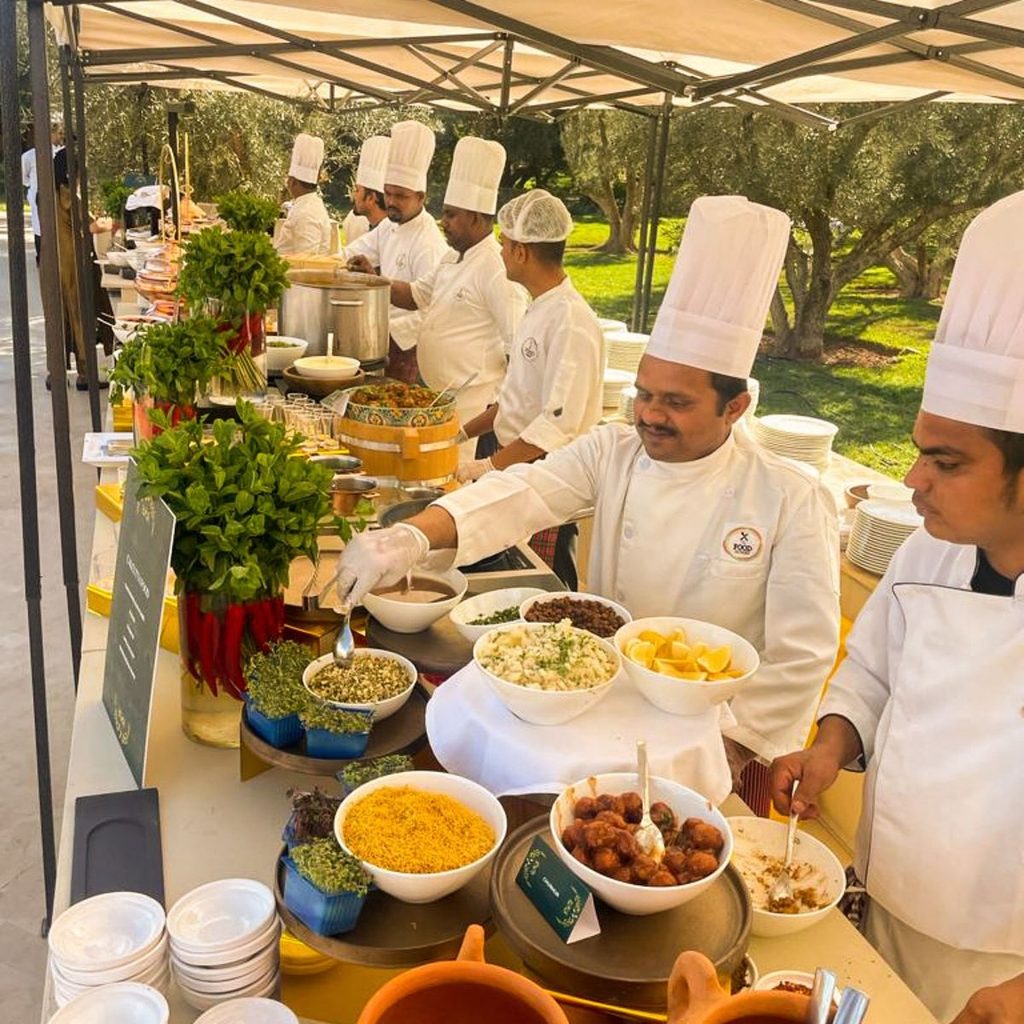
Depending on the event, possibilities may include:
- Chaat
- Fresh breads
- Dosa
- Regional preparations
- Other made-to-order dishes
But a live counter should be selected based on the event rather than added simply because it is popular.
Before including one, consider:
- Available space
- Guest count
- Queue management
- Staff requirements
- Preparation time
- Equipment
- Placement
A live counter should add to the experience, not interfere with the flow of the buffet.
Create Balance in the Main Course
The main course is where buffet balance becomes especially important.
You do not want five dishes competing for the same role.
Instead, think about different categories.
For example:
Vegetable Preparation
A dry or semi-dry vegetable dish can add texture and variety.
Gravy-Based Dish
A rich or aromatic gravy can provide another style of preparation.
Paneer Preparation
Paneer can provide a familiar and substantial vegetarian choice.
Dal
A comforting dal can bring warmth and balance to the meal.
Regional Speciality
One distinctive regional dish can give the menu personality.
The exact dishes will depend on the event, but the principle remains the same:
Different dishes should complement each other.
Don’t Make Every Dish Rich
This is one of the most important principles in buffet planning.
If every dish is creamy, rich, fried or heavily spiced, guests may quickly feel overwhelmed.
Balance richer dishes with:
- Light vegetable preparations
- Dal
- Fresh salads
- Raita
- Seasonal vegetables
- Chutneys
- Simple rice preparations
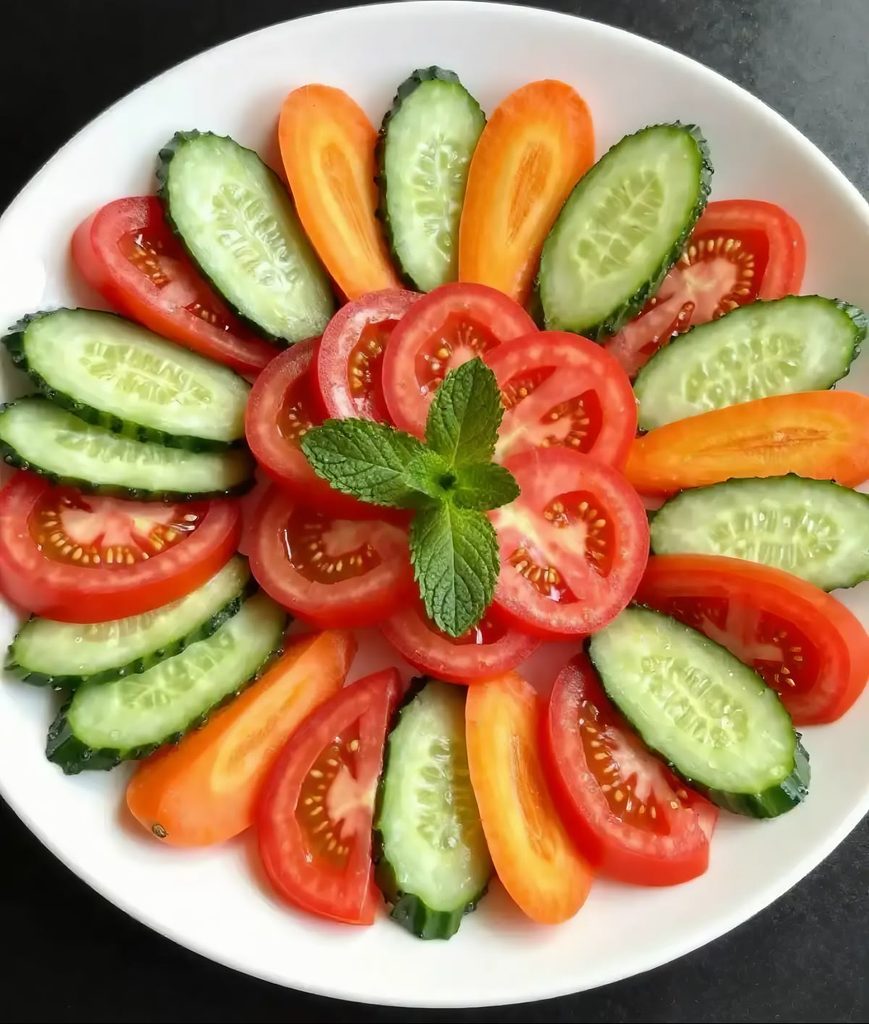
A balanced buffet gives guests the ability to choose according to their appetite.
Some guests may want something rich and indulgent.
Others may prefer a lighter plate.
Good menu planning makes room for both.
Use Paneer Thoughtfully
Paneer is a popular choice in Indian vegetarian buffets.
It works well in many styles of preparation and is familiar to a wide range of guests.
However, too many paneer dishes can make the menu feel repetitive.
If you are already serving a paneer starter, think carefully before adding several paneer-based main courses.
Instead, allow other ingredients to share the spotlight.
A buffet becomes more interesting when guests can move from vegetables to lentils, rice, breads and regional dishes rather than seeing the same ingredient repeatedly.
Give Dal Its Place
Dal is sometimes treated as a simple supporting dish.
But in Indian cuisine, it can be an important part of a satisfying meal.
A thoughtfully selected dal can provide:
- Comfort
- Familiarity
- Protein
- A different texture
- Balance against richer dishes
The right dal can complement the rest of the buffet beautifully.
There is no need for several dal varieties unless the event specifically calls for them.
One well-selected preparation may be enough.
Plan the Breads Around the Main Course
Breads should work with the dishes being served.
If the buffet contains several rich gravies, you may want breads that complement them without making the overall meal too heavy.
Depending on the event, you might consider:
- Roti
- Naan
- Paratha
- Poori
- Regional breads
The number of bread varieties should depend on the guest count and menu.
At a large celebration, multiple options can be useful.
At a smaller gathering, one or two well-chosen breads may be sufficient.
Choose Rice That Adds Something Different
Rice can be another opportunity to introduce flavour and variety.
Depending on the menu, options might include:
- Steamed rice
- Jeera rice
- Pulao
- Biryani
- Regional rice preparations
Again, more is not automatically better.
If the buffet already has a rich biryani, adding several other rice dishes may not be necessary.
Think about what the rice contributes to the overall meal.
Don’t Forget Salads, Raita and Accompaniments
Fresh accompaniments can make a significant difference to a rich Indian buffet.
Consider:
- Fresh salads
- Raita
- Chutneys
- Pickles
- Papad
- Other suitable accompaniments
These elements can provide freshness, crunch, tanginess and contrast.
They also give guests more control over how they build their plate.
Sometimes the smallest supporting dishes help bring the whole meal together.
Consider Spice Levels
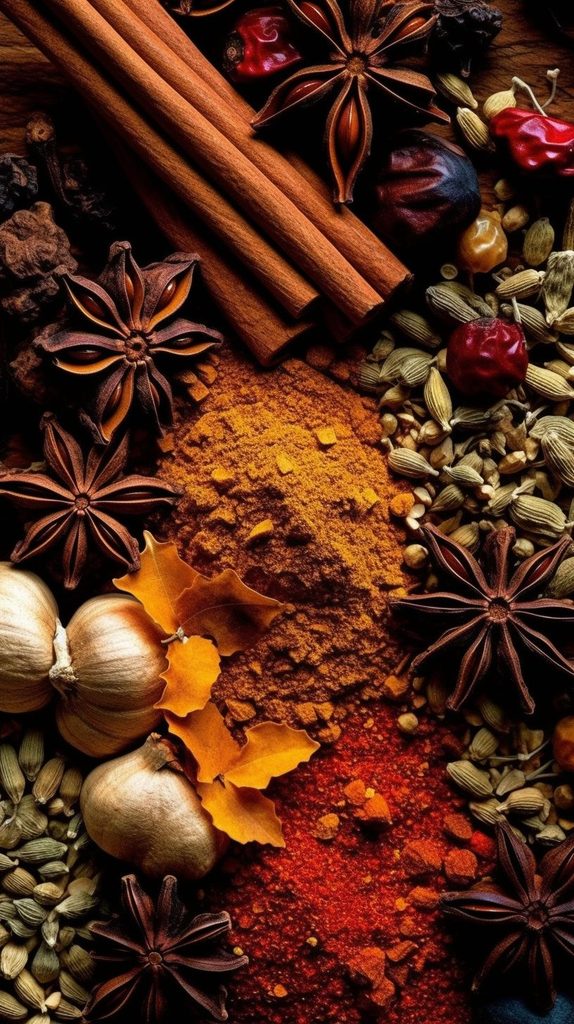
Indian cuisine includes an enormous range of spice levels.
A good buffet should not assume that every guest wants the same level of heat.
Try to create a menu with variation.
Some dishes can be aromatic and mildly spiced, while others can offer more intensity.
If there are particularly spicy preparations, appropriate labeling can help guests make informed choices.
This is especially useful when guests come from different culinary backgrounds.
Include Regional Indian Flavours
An Indian buffet does not have to be limited to one standard style.
Regional dishes can add character and help tell a culinary story.
Depending on the celebration, you could explore flavours inspired by:
- Punjab
- Rajasthan
- Gujarat
- Maharashtra
- Bengal
- South India
- Other regional traditions
You do not need to turn the entire buffet into a tour of India.
Even one carefully selected regional dish can give the menu a distinctive identity.
Think About Vegetarian Variety
For many Indian celebrations, vegetarian food forms a major part of the buffet.
A strong vegetarian selection should include more than one type of preparation.
Think about variety across:
- Vegetables
- Paneer
- Lentils
- Rice
- Breads
- Chaat
- Regional dishes
- Accompaniments
This is particularly important when the entire event is vegetarian.
The buffet should feel abundant without becoming repetitive.
Plan the Dessert Section Separately
Desserts deserve as much thought as the main course.
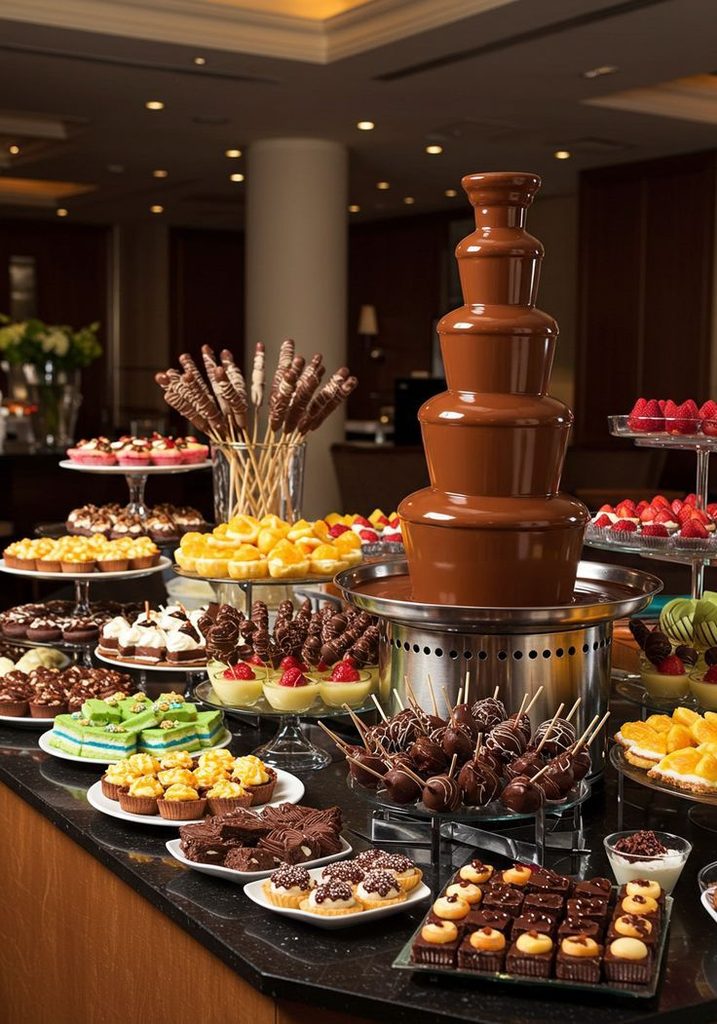
A balanced dessert selection can include a combination of:
- Indian sweets
- Traditional desserts
- Chilled desserts
- Warm desserts
- Seasonal options
- Contemporary choices
Think about texture and richness here too.
If the main course is already quite rich, a lighter dessert option can provide welcome contrast.
For weddings, a dedicated mithai selection can also connect the dessert experience with Indian traditions of celebration.
Give Indian Mithai a Special Place
Indian sweets are more than dessert.
They are closely connected with celebrations, family traditions and hospitality.
Depending on the occasion, your buffet might include traditional favourites such as:
- Barfi
- Peda
- Gulab jamun
- Jalebi
- Rasgulla
- Motichoor or boondi-based sweets
- Regional mithai
The selection should reflect the occasion and the guests.
A smaller collection of carefully selected sweets can be more memorable than a large display with too many similar options.
For more ideas, see our earlier guide on Indian Sweets for Weddings: Choosing Mithai for Every Celebration.
Consider the Season
Seasonality should influence buffet planning.
A summer celebration may benefit from refreshing dishes, chilled beverages and lighter preparations.
During cooler months, guests may appreciate warm, richer dishes and comforting desserts.
Seasonal ingredients can also make a menu feel more connected to the time of year.
Instead of creating exactly the same buffet throughout the year, consider allowing the menu to change with the season.
Plan the Buffet Flow
A balanced menu needs a balanced physical layout.
Imagine yourself as a guest approaching the buffet.
Can you easily see the available choices?
Can you understand where the line begins?
Are popular dishes positioned in a way that creates unnecessary congestion?
A practical buffet flow might be:
Welcome → Starters → Salads & Accompaniments → Main Course → Breads & Rice → Desserts → Beverages
The exact arrangement will depend on the venue.
For larger events, multiple service points may help reduce queues.
Keep Popular Items Accessible
Some dishes naturally attract more guests than others.
If a particularly popular item is placed in a narrow or crowded section, it can slow down the entire buffet.
Think about placement.
You may want to distribute popular dishes rather than putting everything guests want most in one small area.
This is where experience and event planning become important.
A buffet is not just a menu.
It is also a system through which hundreds of people may move.
Make the Buffet Easy to Understand
Guests should not have to guess what they are looking at.
Clear labels can be particularly helpful when:
- Dishes have unfamiliar names
- Different dietary requirements are being accommodated
- Several similar-looking dishes are present
- Regional dishes are included
Good labeling can also add a small educational element.
A guest may discover a new dish simply because they know what it is.
Think About Presentation
The buffet is part of the visual experience of the event.
Presentation should make the food look inviting while keeping it practical for service.
Think about:
- Clean serving areas
- Logical placement
- Appropriate serving vessels
- Clear labels
- Dessert presentation
- Live counter arrangement
- Replenishment
The goal is not decoration for decoration’s sake.
The presentation should support the food and make the guest experience easier.
Plan for Replenishment
A buffet should look inviting throughout the meal, not just when it first opens.
Discuss how food will be replenished.
Consider:
- Timing
- Serving quantities
- Staff availability
- Backup preparation
- Popular dishes
- Dessert replenishment
The catering team should be able to maintain the buffet without creating unnecessary disruption.
This is particularly important for large celebrations.
Don’t Forget Beverages

Beverages are easy to overlook when building the menu.
Consider what suits the event and the season.
Depending on the occasion, options may include:
- Welcome drinks
- Water
- Traditional Indian beverages
- Refreshing summer drinks
- Tea or coffee
- Other non-alcoholic options
The beverage station should be easy to access without interfering with the main food service.
Create a Buffet That Feels Generous, Not Excessive
There is a difference between abundance and excess.
An impressive Indian buffet does not need to cover every possible dish.
It needs to provide enough meaningful choices.
A useful test is to look at your final menu and ask:
Are there too many dishes serving the same purpose?
If yes, simplify.
For example, if you have several rich paneer gravies, multiple similar rice preparations and many comparable desserts, removing a few items may actually improve the overall experience.
A well-edited menu can feel more premium than an overloaded one.
A Practical Indian Buffet Menu Planning Checklist
Use this checklist when planning your next buffet.
Before Finalizing the Menu
☐ Confirm the occasion
☐ Estimate guest count
☐ Consider the season
☐ Understand guest preferences
☐ Note dietary requirements
☐ Decide your catering budget
☐ Choose the overall food style
Starters
☐ Choose different textures
☐ Include suitable vegetarian options
☐ Consider a chaat counter
☐ Consider live counters where appropriate
☐ Avoid too many similar fried items
Main Course
☐ Select vegetable preparations
☐ Choose paneer thoughtfully
☐ Include dal
☐ Select suitable breads
☐ Choose rice preparations
☐ Add regional dishes where appropriate
☐ Include salads and accompaniments
☐ Balance rich and lighter dishes
☐ Consider spice levels
Desserts
☐ Choose Indian sweets
☐ Select additional desserts if needed
☐ Consider seasonal options
☐ Create variety in texture
☐ Plan dessert presentation
Service
☐ Plan buffet layout
☐ Check guest flow
☐ Decide number of service points
☐ Confirm staffing
☐ Plan food replenishment
☐ Arrange clear labels
☐ Confirm beverage station
☐ Coordinate with venue and event team
Example of a Balanced Indian Buffet Structure
Every event is different, but the following structure can help when beginning your planning.
Welcome
- One or two suitable welcome beverages
Starters
- One crispy or fried option
- One grilled or roasted option
- One regional or distinctive option
- Optional chaat or live counter
Main Course
- One dry vegetable preparation
- One gravy-based vegetable dish
- One paneer preparation
- One dal
- One regional speciality
Breads
- One or two suitable bread varieties
Rice
- One flavoured rice or pulao
- Optional biryani depending on the event
Accompaniments
- Salad
- Raita
- Chutney
- Pickle
- Papad
Desserts
- One or two traditional desserts
- Selected Indian mithai
- Optional contemporary dessert
This is not a fixed menu.
It is simply a framework to help you build a buffet without losing balance.
Common Indian Buffet Planning Mistakes
1. Thinking More Dishes Means a Better Buffet
A long menu can create variety, but it can also create repetition.
Focus on meaningful choices.
2. Making Every Dish Rich
Balance rich preparations with fresh and lighter options.
3. Repeating the Same Ingredient
Multiple paneer or similar gravy dishes can make the buffet feel less diverse.
4. Ignoring Guest Movement
A beautiful buffet can still become frustrating if its layout creates long queues.
5. Forgetting Dessert Balance
The dessert section should complement the meal rather than simply add more sweetness.
6. Choosing Dishes Without Considering the Season
Food should suit the weather and event timing.
7. Ignoring Dietary Requirements
Discuss specific requirements before the final menu is confirmed.
8. Treating Presentation as an Afterthought
Buffet presentation and organization contribute to the overall guest experience.
Frequently Asked Questions About Indian Buffet Menus
How do I create a balanced Indian buffet menu?
Start with the occasion, guest count and event style. Then build the buffet in sections, including starters, main courses, breads, rice, accompaniments, desserts and beverages. Focus on variety and balance rather than simply increasing the number of dishes.
How many dishes should an Indian buffet have?
There is no universal number. The ideal menu depends on the guest count, event type, budget, service style and number of courses. A well-balanced selection is more important than a specific dish count.
What should an Indian wedding buffet include?
An Indian wedding buffet can include starters, live counters, vegetable dishes, paneer, dal, breads, rice, salads, accompaniments, Indian sweets and desserts. The exact menu should reflect the couple, family, guests and style of celebration.
How can I prevent an Indian buffet from feeling too heavy?
Balance rich dishes with lighter vegetable preparations, fresh salads, raita, suitable accompaniments and simpler rice or dal options. Avoid selecting too many dishes with similar rich flavours.
Should I include a live counter in my buffet?
A live counter can be a great addition when the venue, guest count, menu and staffing allow it. It should improve the guest experience without creating unnecessary queues or crowding.
How important is buffet layout?
Very important. Even an excellent menu can become difficult to enjoy if guests cannot move comfortably. Buffet placement should consider guest flow, popular dishes, service points, live counters and seating.
The Annmay by MSC Approach
At Annmay by MSC, we believe a good buffet is about balance.
It is not about putting every possible dish on the table.
It is about understanding the occasion and creating a food experience where every part has a purpose.
A comforting dal can sit alongside a rich vegetable preparation.
A traditional sweet can sit alongside a contemporary dessert.
A familiar favourite can share the table with a regional speciality.
And all of it should come together in a way that feels natural for the celebration.
We believe food should be served with thoughtfulness, respect and warmth.
Because when guests gather around a table, they are not simply choosing what to eat.
They are sharing an experience.
Our philosophy is simple:
Love Everyone. Serve Everyone. Remember God.
Final Thoughts
Creating a balanced Indian buffet menu is an exercise in thoughtful choices.
You do not need every dish.
You need the right combination of dishes.
You need variety without repetition.
You need richness balanced with freshness.
You need traditional flavours alongside choices that reflect the occasion.
And you need a service plan that allows guests to enjoy everything comfortably.
When food, presentation, timing and hospitality work together, a buffet becomes more than a collection of dishes.
It becomes part of the celebration.
And that is what makes a well-planned Indian buffet memorable.
Planning a Catering Buffet?
If you are planning a wedding, family gathering, religious function or other celebration and looking for a catering team that values food, service and hospitality, Annmay by MSC would be happy to be part of your celebration.
Love Everyone. Serve Everyone. Remember God.