Indian Sweets for Weddings: Choosing Mithai for Every Celebration
Indian weddings are celebrations of family, tradition, togetherness and, of course, food.
Among all the dishes served at a wedding, Indian sweets hold a special place.
Mithai is not simply something served at the end of a meal. In many Indian celebrations, sweets are connected with happiness, blessings, hospitality and important moments in life. They may be offered to guests, exchanged between families, served during ceremonies or carefully packed as gifts.
That is what makes choosing Indian sweets for weddings a little different from choosing an ordinary dessert menu.
There are countless varieties of mithai, from familiar classics to regional specialties and modern interpretations. The challenge is not finding enough sweets. It is choosing the right ones for your celebration.
In this guide, we will explore how to select wedding mithai, how to match sweets with different functions, what to consider when planning a sweet counter, and how to create a selection that feels traditional, thoughtful and memorable.
Why Indian Sweets Are So Important at Weddings
Food has always been closely connected with Indian celebrations, and sweets often carry an especially meaningful role.
A sweet can represent happiness and celebration. It can be part of a family tradition or something guests associate with a particular festival, region or childhood memory.
At weddings, mithai can appear in many forms:
- Served as part of the meal
- Presented during ceremonies
- Offered to visiting guests
- Given as return gifts
- Shared between families
- Arranged on a dedicated sweet counter
- Packed into boxes for guests to take home
Because of this versatility, sweets can become an important part of the wedding experience.
The right selection can feel familiar without being predictable and special without becoming unnecessarily complicated.
Start With the Type of Wedding Function
Not every wedding function needs the same sweets.
The atmosphere, time of day and guest list can influence your selection.
For example, an intimate family gathering may benefit from a smaller selection of familiar mithai, while a large reception may have space for a more elaborate dessert or sweet counter.
Consider the function before choosing the sweets.
Engagement
An engagement is often an opportunity for families to come together and celebrate a new beginning.
A carefully selected combination of traditional mithai and one or two contemporary dessert options can work beautifully.
Mehendi
Mehendi celebrations are often colourful, lively and informal.
This gives you more freedom to include playful sweets, bite-sized mithai and visually attractive options.
Wedding Ceremony
The wedding ceremony is deeply connected with tradition and family customs.
Classic Indian sweets can work especially well here, particularly when they have cultural or family significance.
Reception
A reception may allow for a more extensive dessert experience.
Alongside traditional mithai, you could consider a wider dessert selection or a dedicated sweet counter.
The key is to make sure the sweets suit the atmosphere rather than simply increasing the number of options.
Choose Traditional Indian Mithai
Traditional sweets remain popular for a reason.
They carry familiarity and cultural meaning, and many guests already have a favourite.
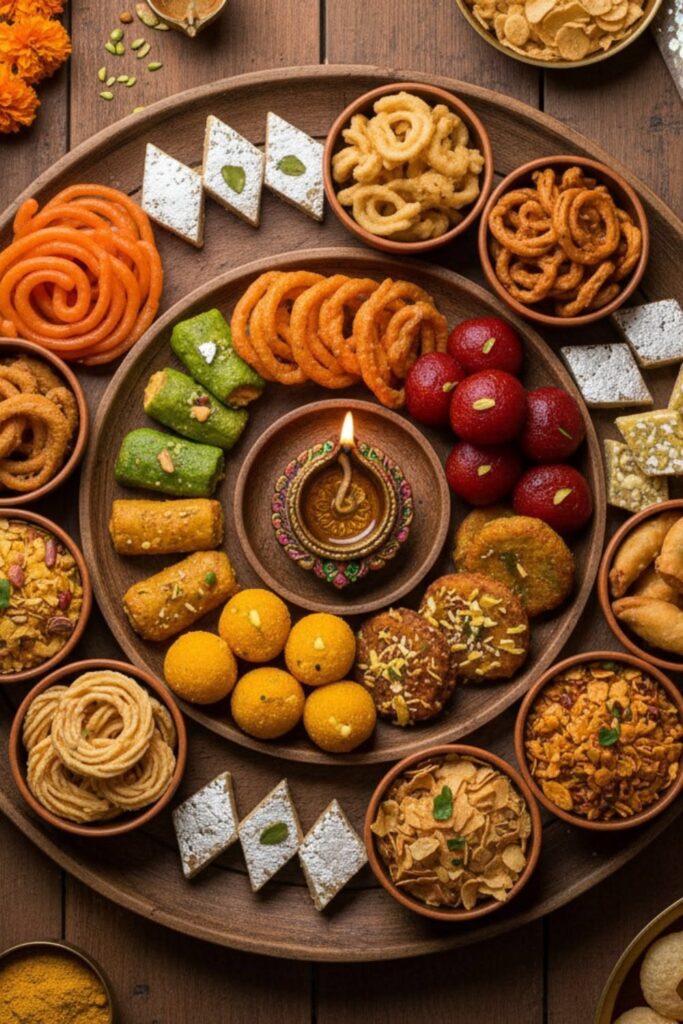
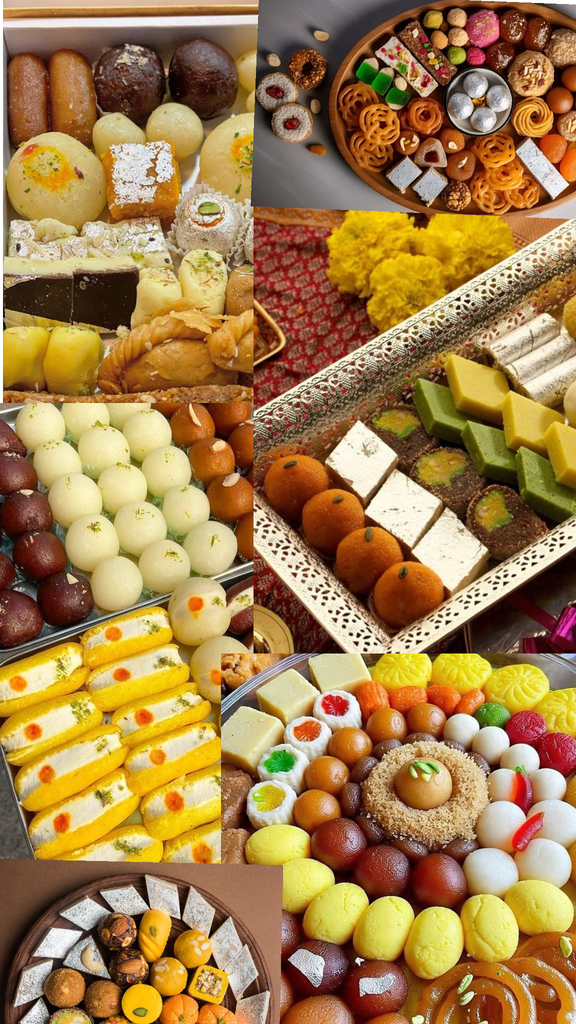
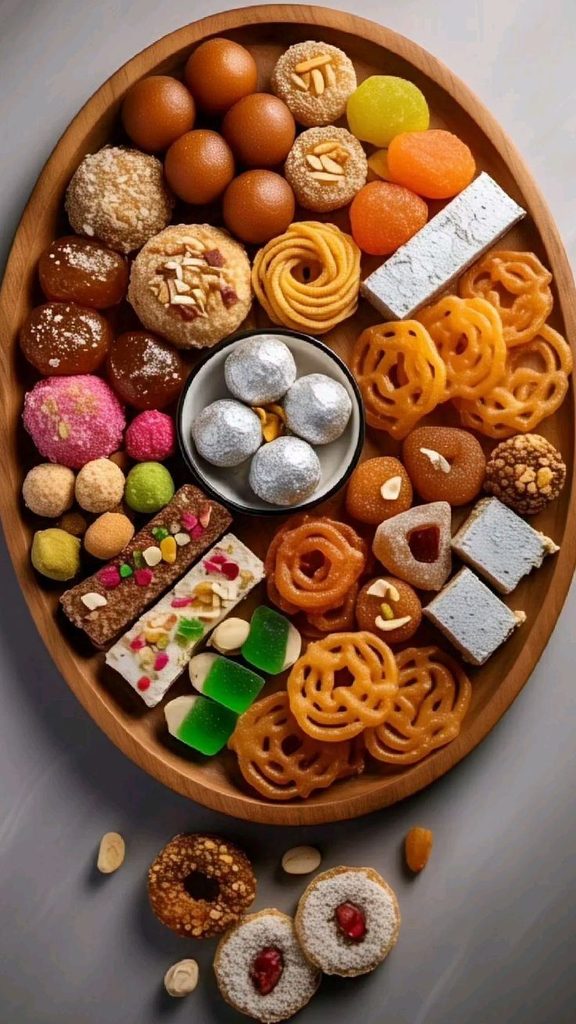
Depending on your family traditions and regional preferences, your selection might include classics such as:
- Gulab jamun
- Rasgulla
- Kaju-based sweets
- Besan-based sweets
- Motichoor or boondi-based sweets
- Peda
- Barfi
- Jalebi
- Traditional regional mithai
You do not need every variety on the table.
A smaller selection of well-chosen sweets can often create a more enjoyable experience than a large collection where several items feel similar.
Think about variety in flavour, texture, appearance and style.
Include Sweets That Have Meaning
Sometimes the best wedding sweet is not the most elaborate one.
It may be the one that reminds a family of home.
Perhaps a particular mithai has always been served during family celebrations. Maybe a regional sweet represents the family’s roots. Or perhaps there is a traditional sweet that parents and grandparents especially enjoy.
These personal connections can make a menu feel more meaningful.
When planning your wedding sweets, ask:
- Is there a family favourite?
- Is there a regional sweet connected to the family?
- Is there a traditional mithai associated with the occasion?
- Is there something older family members particularly enjoy?
- Is there a sweet you would like guests to remember from your celebration?
A meaningful sweet can tell part of your family’s story.
Think About Regional Indian Sweets
India’s dessert traditions are incredibly diverse.
Different regions have their own ingredients, techniques and favourite sweets.
That gives wedding hosts an opportunity to bring regional identity into the menu.
For example, a wedding with strong North Indian family traditions may feature one selection, while a family with roots in another part of India may choose completely different favourites.
You can also use regional sweets to introduce guests to something they may not have tried before.
The important thing is to understand the story behind the choice.
Regional variety should add character to the menu rather than simply becoming another list of dishes.
Create Balance in Your Mithai Selection
One of the most useful principles when choosing Indian sweets for weddings is balance.
Instead of choosing five sweets that are all similar, create some contrast.
For example, consider differences in:
Texture:
Soft, creamy, dense, crisp or syrupy.
Flavour:
Mild, rich, fragrant or nut-based.
Appearance:
Different shapes, colours and presentation styles.
Temperature:
Some sweets can be served warm while others are enjoyed at room temperature or chilled.
Style:
Traditional classics alongside one or two contemporary choices.
Balance makes the sweet selection more interesting and easier for guests to explore.
Consider the Size of the Sweet Counter
A large wedding does not automatically require a huge sweet counter.
The available space, guest count and overall menu should guide the decision.
If the main meal already contains several desserts, you may not need an enormous mithai display.
On the other hand, if sweets are an important part of your celebration, a dedicated counter can become a beautiful feature.
Before deciding, consider:
- Number of guests
- Number of sweet varieties
- Available counter space
- Guest movement
- Service requirements
- Other desserts being served
- Whether sweets are for eating, gifting or both
A well-planned counter should look inviting without becoming difficult to navigate.
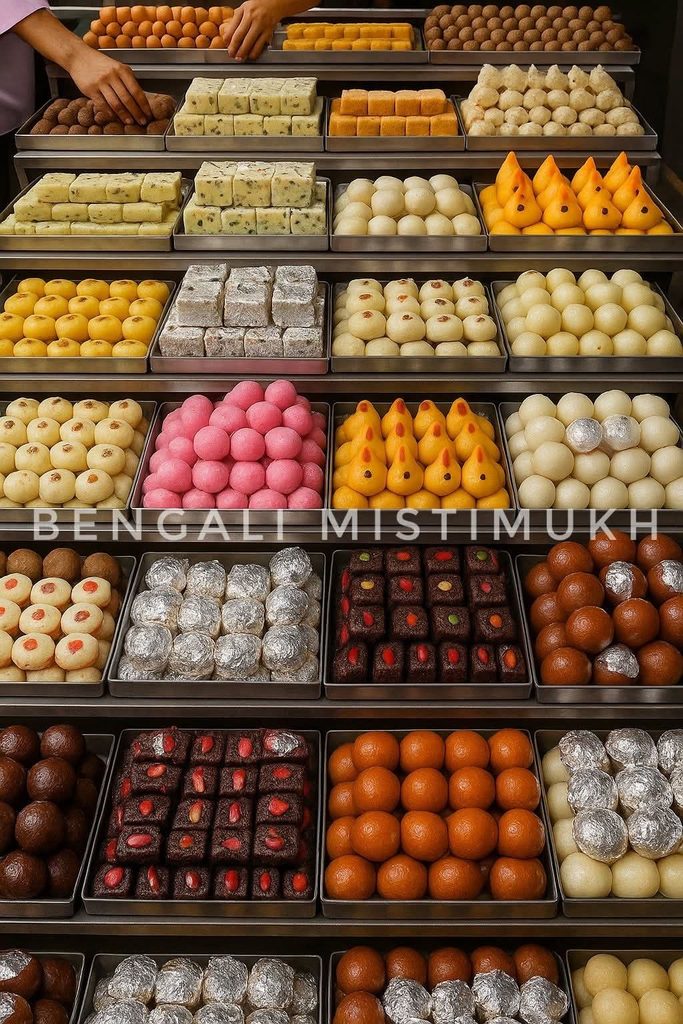
Think Beyond Taste: Presentation Matters
A wedding sweet counter is also part of the overall celebration.
Presentation can influence how inviting the food feels.
Consider:
- Arrangement of different sweets
- Serving trays
- Labels
- Height and placement
- Lighting
- Overall counter design
- Portion sizes
- Ease of serving
The presentation should complement the wedding rather than overpower the food itself.
Traditional mithai can look elegant when presented thoughtfully and cleanly.
You do not always need elaborate decoration.
Sometimes, simple and well-organized presentation allows the sweets to speak for themselves.
Decide Between Mithai and Desserts
Indian weddings increasingly combine traditional mithai with modern dessert options.
There is nothing wrong with doing both.
The important thing is to understand the difference.
Mithai connects strongly with Indian tradition and celebration.
Desserts can offer a wider range of contemporary flavours and presentation styles.
A wedding menu might include traditional sweets alongside desserts such as:
- Kulfi
- Ice cream
- Indian-inspired modern desserts
- Seasonal fruit-based desserts
- Contemporary plated desserts
The combination can work especially well when the traditional and modern elements complement rather than compete with each other.
Don’t Forget the Season
The season can influence which sweets work best.
For a summer wedding, lighter and refreshing dessert options may feel more comfortable for guests.
For cooler months, richer traditional sweets can feel particularly satisfying.
Seasonal ingredients can also add freshness and variety.
When planning the dessert menu, think about:
- Weather
- Event timing
- Indoor or outdoor setting
- Storage requirements
- Serving temperature
- Guest comfort
Food should suit the celebration and the environment in which it is being served.
Consider Your Guest List
A wedding may bring together children, teenagers, parents, grandparents and guests from different parts of the country.
Their preferences may be very different.
That is another reason not to build the entire sweet selection around one style.
Try to provide some familiar choices alongside a few distinctive options.
For example, a child may immediately choose a familiar sweet, while another guest may be excited to try a regional specialty.
Variety allows guests to make their own choices.
That is one of the pleasures of an Indian wedding buffet.
Plan Sweets for Different Wedding Moments
Mithai does not have to appear only during the main meal.
Different wedding moments can have different sweet requirements.
Welcome
Small pieces of mithai can provide a warm and traditional welcome.
Ceremonies
Certain sweets may have a role connected to family or cultural traditions.
Main Meal
Mithai can be part of the dessert section or buffet.
Sweet Counter
A dedicated display can allow guests to choose from several varieties.
Return Gifts
Selected sweets can be packed beautifully for guests to take home.
Planning sweets around these moments can make the overall experience feel more intentional.
Think About Mithai as a Wedding Gift
Indian sweets are also closely connected with gifting.
A beautifully packed sweet box can become a small extension of the celebration.
When selecting sweets for gifting, consider:
- Shelf life
- Ease of transportation
- Packaging
- Portion size
- Variety
- Occasion
- Guest convenience
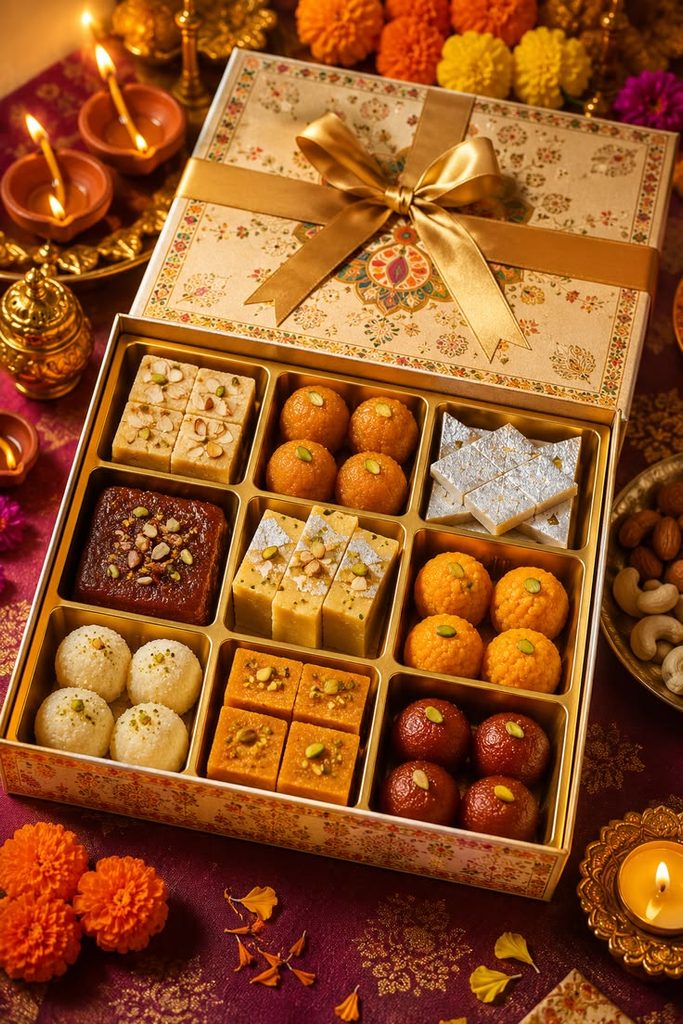
The best gifting sweets are not necessarily the most complicated ones.
They should be enjoyable, practical and representative of the celebration.
Ask About Freshness and Preparation
When selecting a caterer or sweet provider, it is reasonable to ask questions about how the sweets are prepared and handled.
You may want to discuss:
- Preparation schedule
- Ingredients
- Storage
- Serving conditions
- Freshness
- Packaging
- Quantity planning
Freshness can have a major effect on the experience of mithai.
A sweet that looks beautiful but is not at its best will not leave the impression you want.
Clear communication before the event helps avoid unnecessary surprises.
Plan the Quantity Carefully
One common mistake is assuming that more varieties automatically mean more food.
Instead, think about the overall dessert plan.
If you have:
- Several mithai varieties
- A dessert counter
- Ice cream or kulfi
- A large wedding meal
then guests may naturally take smaller portions of each option.
Your catering team can help you plan quantities based on the guest count, menu and service style.
The goal is to have enough for guests without creating unnecessary excess.
Good planning is about balance.
15. Choose Quality Over Quantity
A wedding sweet counter does not need twenty different varieties to impress guests.
Sometimes four or five carefully selected sweets can create a stronger experience than a crowded counter with too many similar choices.
Ask yourself:
Would I rather offer many average options or a smaller selection of sweets that guests genuinely enjoy?
For a meaningful celebration, quality should always have a strong place in the decision.
The same principle applies across the wedding menu.
More is not always better.
Better is better.
16. Make the Sweet Counter Part of the Wedding Experience
A good sweet counter should feel connected to the rest of the celebration.
Think about how guests discover it.
Is it easy to find?
Does it create unnecessary queues?
Can guests see the available choices?
Are the sweets clearly presented?
Can older guests comfortably access the counter?
Are staff available when needed?
These small details can make a significant difference.
A wedding is a journey for the guest, and the dessert experience is one part of that journey.
A Simple Indian Wedding Mithai Checklist
Before finalizing your sweets, use this checklist.
Menu Planning
☐ Decide which wedding functions need sweets
☐ Choose traditional favourites
☐ Include meaningful family or regional options
☐ Create variety in flavour and texture
☐ Decide whether modern desserts are needed
☐ Consider the season
☐ Consider children’s and senior guests’ preferences
Sweet Counter
☐ Decide the number of varieties
☐ Confirm counter size
☐ Plan presentation
☐ Arrange labels if needed
☐ Consider guest movement
☐ Confirm serving staff
☐ Plan replenishment
Quality and Logistics
☐ Discuss preparation timing
☐ Confirm freshness and storage
☐ Discuss ingredient requirements
☐ Confirm quantities
☐ Plan packaging if sweets are being gifted
☐ Confirm final selections before the event
Common Mistakes When Choosing Wedding Sweets
Choosing Too Many Similar Sweets
Five sweets with almost identical flavours or textures may not provide much variety.
Ignoring the Main Menu
If the meal is already very rich, adding an excessively heavy dessert selection may leave guests overwhelmed.
Choosing Based Only on Appearance
Beautiful presentation is valuable, but taste and freshness should remain priorities.
Forgetting Guest Accessibility
A dessert counter should be comfortable for guests of different ages and abilities to use.
Leaving Quantities Until the Last Minute
Sweets require planning, especially when they are also being used for gifting.
Following Trends Without Considering the Family
A modern dessert can be a lovely addition, but it should not replace meaningful traditions simply because it is fashionable.
Frequently Asked Questions About Indian Wedding Sweets
What are the best Indian sweets for weddings?
There is no single list that works for every wedding. Traditional favourites, regional specialties and family-preferred mithai are all good starting points. The best selection depends on your guests, wedding style, season and overall menu.
How many sweets should a wedding have?
The number depends on the guest count, meal menu, dessert options and whether sweets are also being used for gifting. A smaller selection with good variety is often more practical than an unnecessarily large one.
Should a wedding have both mithai and modern desserts?
It can. Traditional mithai provides cultural familiarity, while modern desserts can add variety. The two can work well together when the overall dessert menu remains balanced.
What should I consider when choosing wedding mithai?
Consider taste, freshness, guest preferences, regional traditions, season, presentation, quantity, service and whether the sweets will be served at the venue or given as gifts.
Are Indian sweets suitable for wedding return gifts?
Yes. Mithai has a long-standing connection with Indian celebrations and can be a thoughtful way to share the happiness of the occasion with guests.
The Annmay by MSC Perspective
At Annmay by MSC, we believe sweets are about more than sweetness.
They are part of the language of celebration.
A piece of mithai can welcome a guest, mark a happy occasion, bring families together or become a small reminder of a special day.
That is why choosing sweets deserves the same thoughtfulness as choosing the rest of the wedding menu.
We believe in respecting traditional tastes while understanding that every celebration is different.
The right sweet selection should feel natural to the occasion, enjoyable for guests and meaningful to the people hosting the celebration.
Above all, our approach to hospitality is guided by a simple philosophy:
Love Everyone. Serve Everyone. Remember God.
Final Thoughts
Choosing Indian sweets for weddings is not simply about deciding what to put on a dessert table.
It is about choosing flavours that can become part of a memory.
The best wedding sweet may be a traditional mithai that reminds someone of home.
It may be a regional speciality that introduces guests to something new.
It may be a beautifully presented sweet chosen especially for the occasion.
Or it may simply be the one that guests return to for a second helping.
Whatever you choose, focus on balance, quality, freshness and meaning.
Because weddings are made up of many small moments, and sometimes something as simple as a sweet shared between two people becomes part of what they remember.
Planning Your Wedding Menu?
If you are planning a wedding or family celebration and looking for a catering team that values food, service and hospitality, Annmay by MSC would be happy to be part of your celebration.
Love Everyone. Serve Everyone. Remember God.