
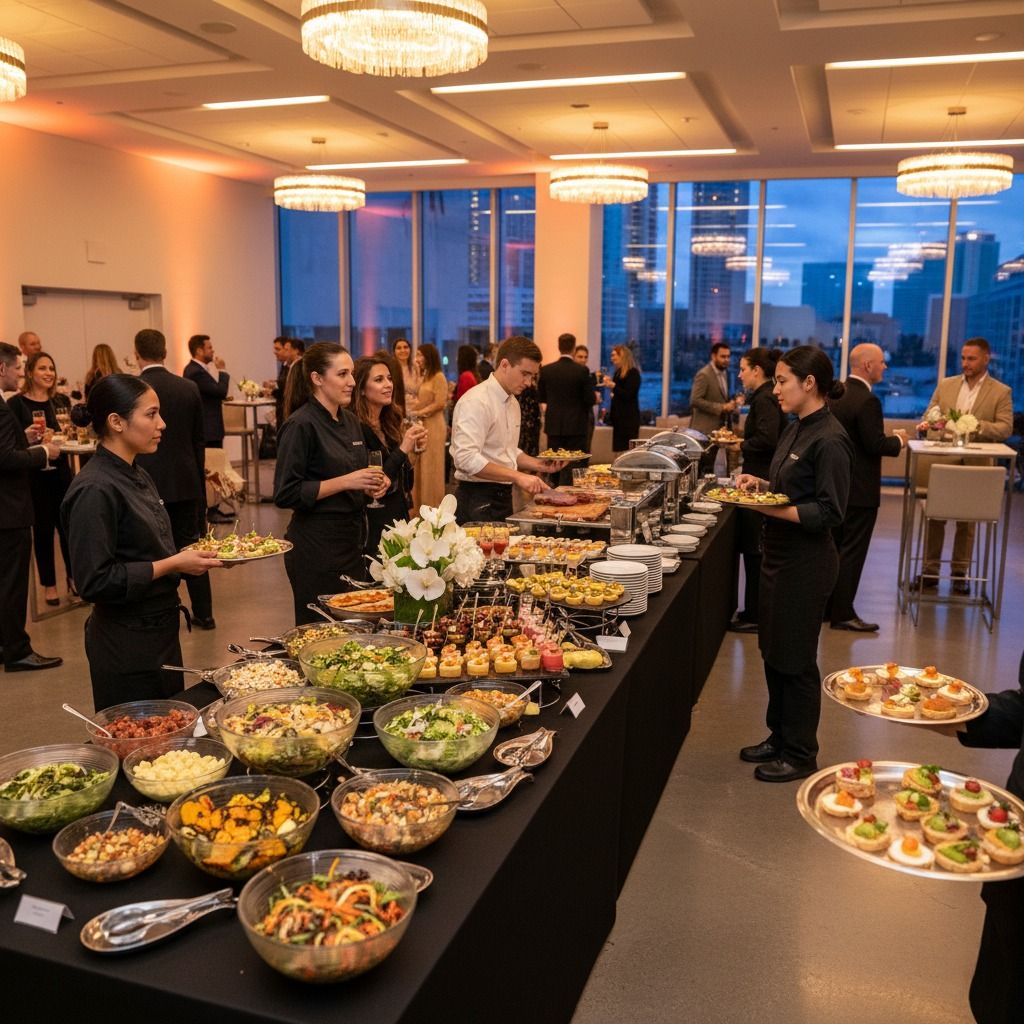
Corporate Catering: How Food Shapes Professional Events
Corporate events are built around people.
Whether it is a business meeting, employee gathering, conference, training session, office celebration or client event, the food served can influence how comfortable and welcomed people feel.
That is why corporate catering is about much more than simply providing meals.
A successful corporate event needs food that fits the schedule, suits the guests, works with the venue and can be served efficiently. At the same time, the catering should feel professional without becoming unnecessarily complicated.
From a simple office lunch to a large business gathering, thoughtful catering can help create a smoother experience for everyone attending.
Why Corporate Catering Matters
Food is often one of the few parts of a corporate event that everyone experiences.
A well-planned meal can give employees a chance to pause, interact and recharge. At a client event, thoughtful hospitality can create a comfortable environment for conversation.
Good corporate catering can support:
- Guest comfort
- Smooth event schedules
- Professional presentation
- Employee satisfaction
- Convenient meal service
- A welcoming atmosphere
The food does not need to be extravagant.
It needs to be appropriate, well planned and served with care.
1. Start With the Purpose of the Event
The type of corporate event should influence the catering plan.
Consider whether you are organising:
- A business meeting
- Conference
- Training programme
- Employee lunch
- Office celebration
- Product or company event
- Client gathering
- Team event
- Formal business dinner
A working lunch requires a different approach from a formal corporate dinner.
Understanding the purpose of the event helps determine the right food, service style and timing.
2. Know Your Guest List
Before choosing the menu, understand who will be attending.

The guest list may include:
- Employees
- Managers
- Senior executives
- Clients
- Business partners
- Speakers
- Visitors
- Guests from different regions or countries
Different groups may have different food preferences.
A corporate menu should therefore offer enough variety while remaining practical for the event.
3. Plan Around the Schedule
Corporate events often follow a strict timetable.
There may be presentations, meetings, workshops, networking sessions and speeches that cannot simply be delayed because lunch is not ready.
This makes timing particularly important.
Discuss with the caterer:
- When guests will arrive
- When food needs to be served
- How long the meal break will be
- Whether refreshments are required between sessions
- When the event will finish
The catering schedule should work around the event rather than interrupt it.
4. Choose the Right Meal Format
Corporate catering can take several forms.
Breakfast
Suitable for early meetings, training sessions and conferences.
Tea and Coffee Service
Useful during meetings, workshops and conference breaks.
Working Lunch
Designed to provide a convenient meal without requiring a long break.
Buffet Lunch
A flexible option when guests have different preferences.
Plated Meal
Can work well for more formal corporate dinners or smaller gatherings.
Evening Snacks
Useful for events that extend through the late afternoon or evening.
The right format depends on the event, guest count, venue and available time.
5. Keep Corporate Menus Practical
A corporate menu should be enjoyable without creating unnecessary complications.
For example, a lunch menu could include:
- A welcome beverage
- One or two starters
- A vegetable preparation
- Dal
- Rice
- Indian bread
- Raita
- Salad
- Dessert
The exact menu should depend on the event.
The main idea is to provide a satisfying meal that guests can enjoy comfortably within the available break.
6. Consider Indian Food for Corporate Events
Indian food can work particularly well for corporate gatherings in India because it offers a wide range of flavours and vegetarian options.
A corporate menu can include familiar Indian dishes while still feeling polished and professional.
Depending on the audience, the menu could combine:
- North Indian favourites
- Regional dishes
- Light starters
- Vegetarian preparations
- Rice dishes
- Indian breads
- Traditional sweets
- Contemporary desserts
The key is choosing dishes that are suitable for the occasion rather than simply selecting everything that is popular.
7. Provide Vegetarian Choices
Vegetarian options should be planned as an important part of the menu rather than treated as an afterthought.
For a mixed corporate audience, a thoughtful vegetarian selection can include:
- Vegetable starters
- Paneer dishes
- Seasonal vegetables
- Dal
- Rice
- Breads
- Salads
- Raita
A vegetarian menu should feel complete and satisfying on its own.
8. Consider Dietary Requirements
Corporate events may bring together people with different dietary needs.
Before finalising the menu, ask whether guests have specific requirements.
These could include:
- Vegetarian preferences
- Jain food
- No-onion or no-garlic preferences
- Food allergies
- Ingredient restrictions
- Other dietary considerations
It is much easier to plan these requirements in advance than to manage them during a busy event.
Clear communication between the organiser and caterer is essential.
9. Think About Spice Levels
Corporate events often include people from different regions and backgrounds.
Not everyone has the same preference for spice.
A balanced menu can include a mixture of mildly flavoured and more traditional dishes.
This gives guests choices without making the entire menu too mild or too spicy.
Accompaniments such as raita, salads and chutneys can also provide additional flexibility.
10. Make Food Easy to Eat
At many corporate events, guests have limited time.
Food that is difficult to serve or eat can make the meal less convenient.
For working lunches and short breaks, practical choices are often better.
Think about:
- Appropriate portion sizes
- Easy-to-handle dishes
- Convenient service
- Organised buffet arrangements
- Clear food labels
The objective is to make the meal comfortable without taking attention away from the purpose of the event.
11. Breakfast Catering for Business Events
Breakfast meetings require a different menu approach.
Guests may appreciate a combination of familiar and lighter options.
Depending on the event, breakfast could include:
- Tea and coffee
- Fresh beverages
- Indian breakfast items
- Light snacks
- Fruit
- Simple accompaniments
The menu should be appropriate for the time of day and the length of the meeting.
12. Tea Breaks Deserve Attention Too
Small refreshments can have an important role in longer corporate events.
A well-timed tea break gives guests an opportunity to pause and interact.
A simple arrangement could include:
- Tea
- Coffee
- Water
- A light savoury snack
- A small sweet or bakery item
The selection does not need to be extensive.
It simply needs to be timely, fresh and easy to enjoy.
13. Think About Client and Guest Experience
When clients or external guests attend a corporate event, hospitality becomes particularly important.
Food should feel welcoming without becoming distracting.
This is where presentation and service matter.
A clean, organised catering setup and attentive staff can create a positive impression while allowing the focus to remain on the business event.
14. Presentation Should Match the Occasion
Corporate catering should look professional.
This does not mean everything needs to be elaborate.
A well-presented buffet can include:
- Neatly arranged dishes
- Clear labels
- Clean serving areas
- Appropriate serving equipment
- Organised beverage stations
- Thoughtful dessert presentation
Simple presentation can often communicate professionalism better than excessive decoration.
15. Buffet or Plated Service?
The right service style depends on the event.
A buffet provides flexibility and allows guests to choose what they prefer.
A plated meal can create a more formal and structured experience.
For a short lunch break, buffet service may work well when planned efficiently.
For a formal business dinner, plated service may be more suitable.
There is no universal answer. The service style should match the event.
16. Consider Live Food Counters Carefully
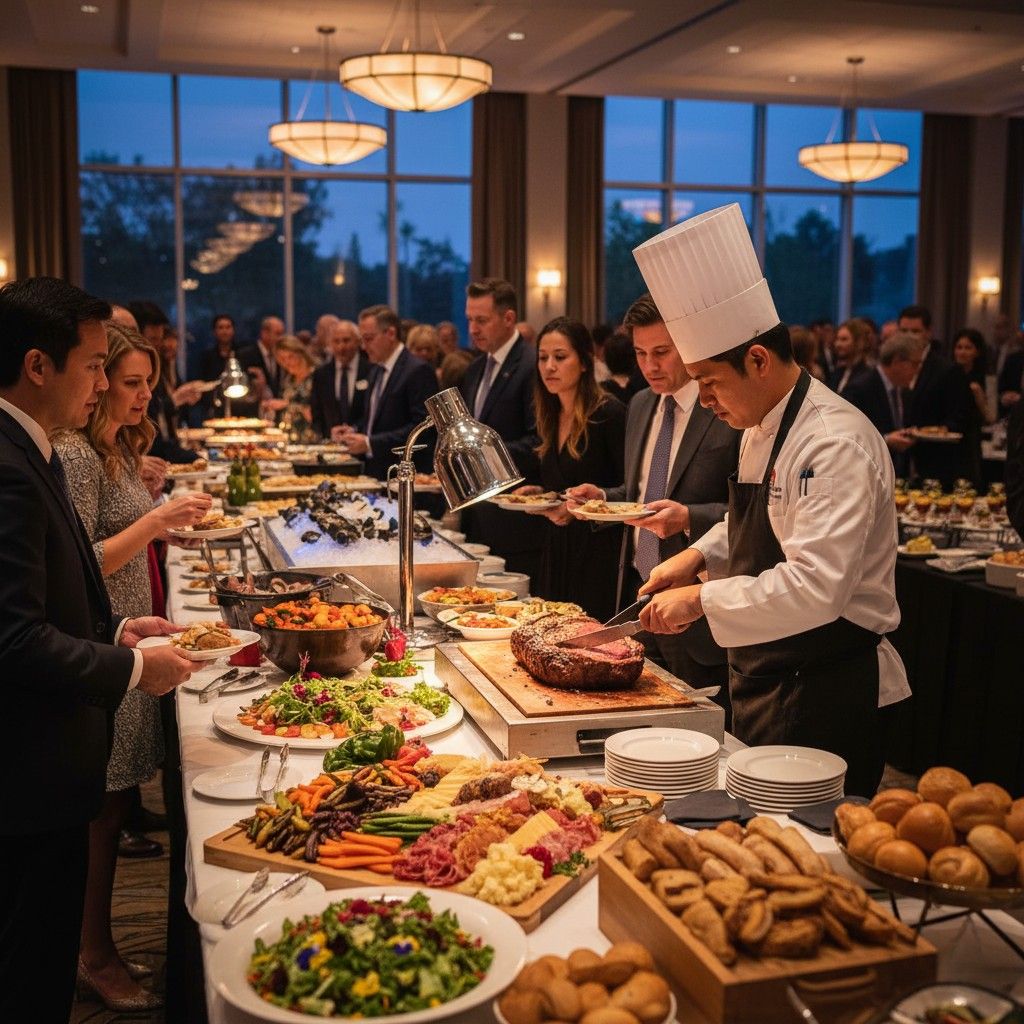
Live counters can add freshness and interaction to some corporate events.
However, they require enough space, staffing and time.
Before including one, consider:
- Available venue space
- Number of guests
- Length of the meal break
- Queue management
- Staff requirements
A live counter should improve the experience rather than create unnecessary waiting.
17. Plan the Buffet Flow
For a buffet, the arrangement of dishes matters.
A practical sequence may move from:
Starters → Main Course → Breads → Rice → Accompaniments → Desserts
The exact arrangement can change depending on the menu.
High-demand dishes should be positioned thoughtfully, and the service area should provide enough space for guests to move comfortably.
For larger events, multiple service points may also be considered if the venue allows.
18. Plan for Food Replenishment
Corporate meals often have a concentrated service period.
Many guests may arrive at the buffet at the same time.
Food should therefore be monitored and replenished according to demand.
The catering team should coordinate closely so that popular dishes remain available and the buffet continues to look organised throughout the meal.
19. Keep Beverages Convenient
Drinks should be easy to access without creating unnecessary queues.
Depending on the event, this could include:
- Water

- Tea

- Coffee

- Fresh beverages

- Traditional Indian drinks

For longer events, beverage stations can be planned separately from the main food service if the venue permits.
20. Think About the Venue
Corporate catering is strongly influenced by the event space.
Before finalising the arrangements, consider:
- Kitchen or preparation facilities
- Buffet space
- Dining area
- Guest movement
- Power requirements
- Water access
- Service entrances
- Waste management
A catering plan that looks good on paper still needs to work in the actual venue.
21. Coordinate With the Event Organiser
Good communication can prevent many problems.
The catering team should understand:
- Event schedule
- Guest numbers
- Meal timings
- Venue restrictions
- Menu requirements
- Dietary considerations
- Service expectations
The organiser should also understand what the catering team needs from the venue.
When both sides communicate clearly, the event becomes easier to manage.
22. Corporate Catering and Employee Experience
Food can also contribute to workplace culture.
An employee meal, festival celebration or office gathering gives colleagues an opportunity to step away from their normal routine and spend time together.
A thoughtful meal does not need to be extravagant to feel special.
Sometimes a well-prepared lunch, familiar sweet or carefully chosen menu can be enough to make an office gathering feel more welcoming.
23. Catering for Corporate Celebrations
Corporate events are not always formal meetings.
Companies may also organise:
- Festival celebrations
- Annual gatherings
- Team lunches
- Employee milestones
- Office parties
- Farewell events
- Appreciation events
These occasions can allow for more variety and personality in the menu.
Indian sweets, regional dishes, live counters or themed food selections may be suitable depending on the celebration.
24. Budget Without Losing Quality
Corporate catering budgets can vary significantly.

Instead of trying to include the maximum number of dishes, decide what matters most.
For example, an organiser might prioritise:
- Food quality
- Efficient service
- Premium presentation
- Dessert
- Beverage service
- A particular cuisine
A focused menu with good execution can often create a stronger experience than an unnecessarily large selection.
25. Hygiene and Professional Standards
Food hygiene should always be part of the catering conversation.
Ask the caterer about:
- Food preparation
- Ingredient handling
- Storage
- Transportation
- Serving equipment
- Buffet cleanliness
- Replenishment
- Special dietary requirements
Corporate events involve many guests, so organised food handling and clean service areas are important parts of a professional catering setup.
26. A Corporate Catering Checklist
Before Booking
- Define the type of corporate event
- Estimate guest numbers
- Set the catering budget
- Decide meal requirements
- Identify dietary requirements
- Choose the service style
Menu Planning
- Plan breakfast, lunch or dinner
- Select starters
- Build the main course
- Include vegetarian choices
- Choose beverages
- Select desserts
- Consider spice levels
Event Coordination
- Confirm meal timings
- Coordinate with the venue
- Plan buffet or dining layout
- Confirm staffing
- Plan replenishment
- Confirm setup and cleanup
Final Checks
- Confirm guest count
- Confirm final menu
- Confirm dietary requirements
- Confirm service schedule
- Confirm venue arrangements
Common Corporate Catering Mistakes
Choosing a menu without considering the schedule
A long meal during a short break can create unnecessary delays.
Offering too little variety
A corporate audience may include guests with different preferences.
Treating vegetarian food as secondary
Vegetarian guests should have a complete and satisfying meal.
Adding unnecessary complexity
Extra dishes and elaborate setups are not always better.
Ignoring venue limitations
The menu and service plan must work within the available space.
Forgetting beverage planning
Drinks are an important part of meetings, conferences and longer events.
Focusing only on food
Professional service, timing, cleanliness and presentation are equally important.
Frequently Asked Questions
What is corporate catering?
Corporate catering refers to food and beverage services provided for business-related events such as meetings, conferences, employee gatherings, office celebrations and client events.
What food is suitable for a corporate event?
The best menu depends on the event, timing and guests. A balanced selection of starters, main-course dishes, vegetarian options, beverages and desserts can work well for many corporate gatherings.
Should corporate catering include Indian food?
Indian food can be an excellent choice for corporate events, particularly when the guest group appreciates familiar Indian flavours. The menu should be selected according to the audience and occasion.
How do I choose a corporate caterer?
Consider food quality, menu flexibility, hygiene practices, service, timing, guest requirements, venue coordination and overall professionalism.
Is buffet catering suitable for corporate events?
Yes. Buffets can work well for many corporate events because they give guests flexibility. However, the layout and service should be planned carefully to avoid unnecessary queues.
How far in advance should corporate catering be planned?
It depends on the size and complexity of the event. Larger events and events with specific menu or dietary requirements generally benefit from earlier planning.
The Annmay by MSC Approach
At Annmay by MSC, we believe corporate catering should combine good food with thoughtful hospitality.
Professional events have their own rhythm. Meetings need to stay on schedule, guests need convenient service and the food should complement the occasion without becoming a distraction.
Our approach is to understand the event first and then plan the catering around its needs.
From menu selection and food presentation to service and coordination, every detail contributes to the guest experience.
Whether it is a business lunch, employee gathering, corporate celebration or larger professional event, we believe people should be served with the same care and respect.
Our philosophy is simple:
Love Everyone. Serve Everyone. Remember God.
Final Thoughts
Corporate catering may look different from wedding or family catering, but the fundamental principle remains the same: people remember how they were treated.
Good food, timely service, clean presentation and genuine hospitality can make a professional event feel more comfortable and organised.
The best corporate catering does not compete with the purpose of the event.
It supports it.
When the food is thoughtfully planned and the service runs smoothly, guests can focus on the conversations, ideas and relationships that brought them together in the first place.
If you are planning a corporate meeting, office celebration, business lunch or professional gathering and looking for a catering team that values food, service and hospitality, Annmay by MSC would be happy to be part of your event.
Love Everyone. Serve Everyone. Remember God.